Pumpkin Unit Study Printable Activities for Kids
Fall brings the perfect chance to turn learning into an adventure with pumpkins! These orange treasures offer endless ways to teach kids about math, science, reading, and more. A pumpkin unit study combines hands-on activities with real learning, making education feel like play while building important skills.
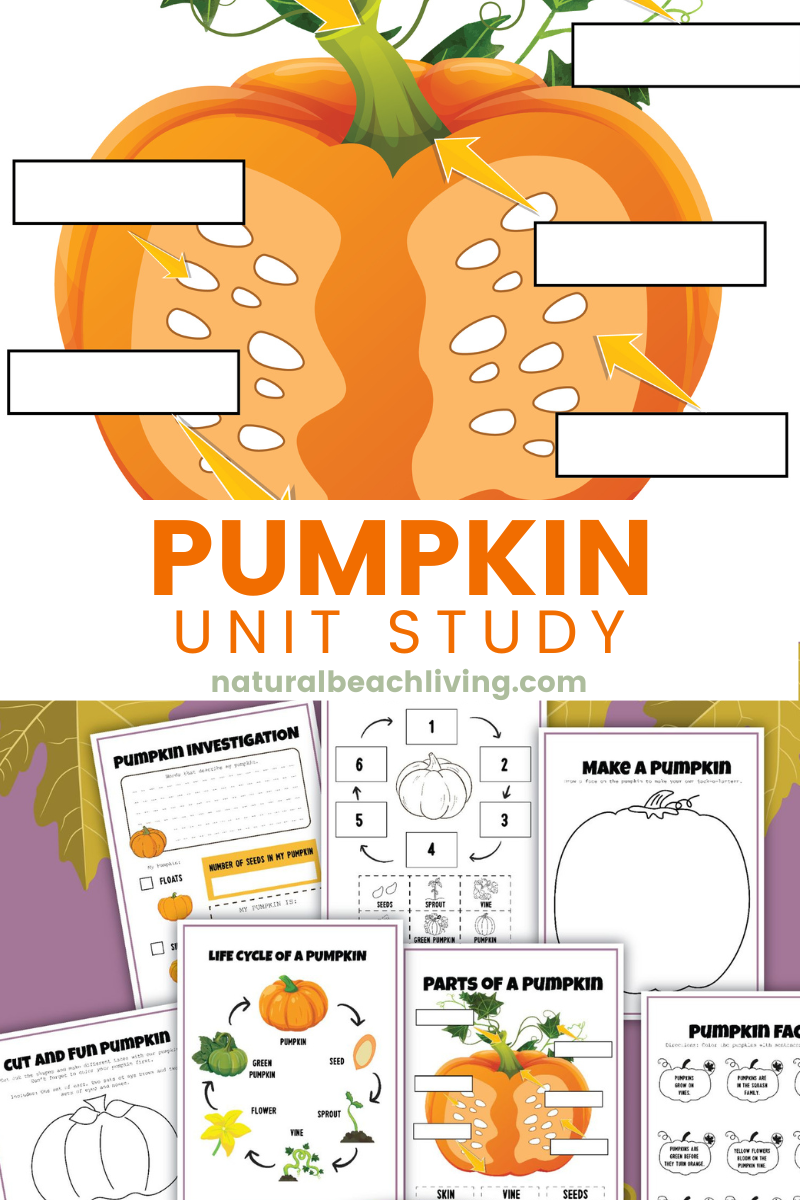
Pumpkin Unit Study for Kids: Creative Learning Activities for Fall
You don’t need fancy materials or expensive books to create amazing pumpkin lessons. Just grab a few pumpkins from the store or pumpkin patch, and you’re ready to start. Your kids can measure, weigh, count seeds, learn about plant parts, and even cook tasty fall snacks.
This type of learning works great for kids from preschool through elementary school. You can make activities easier or harder based on what your child needs. The best part is watching your kids get excited about learning when they can touch, explore, and discover things for themselves.
affiliate links can be found on this blog at no cost to you.
Essential Elements of a Pumpkin Unit Study
A complete pumpkin unit study combines science exploration with hands-on learning activities. These core elements help children understand how pumpkins grow, their basic parts, and scientific concepts through direct observation.
The Life Cycle of a Pumpkin
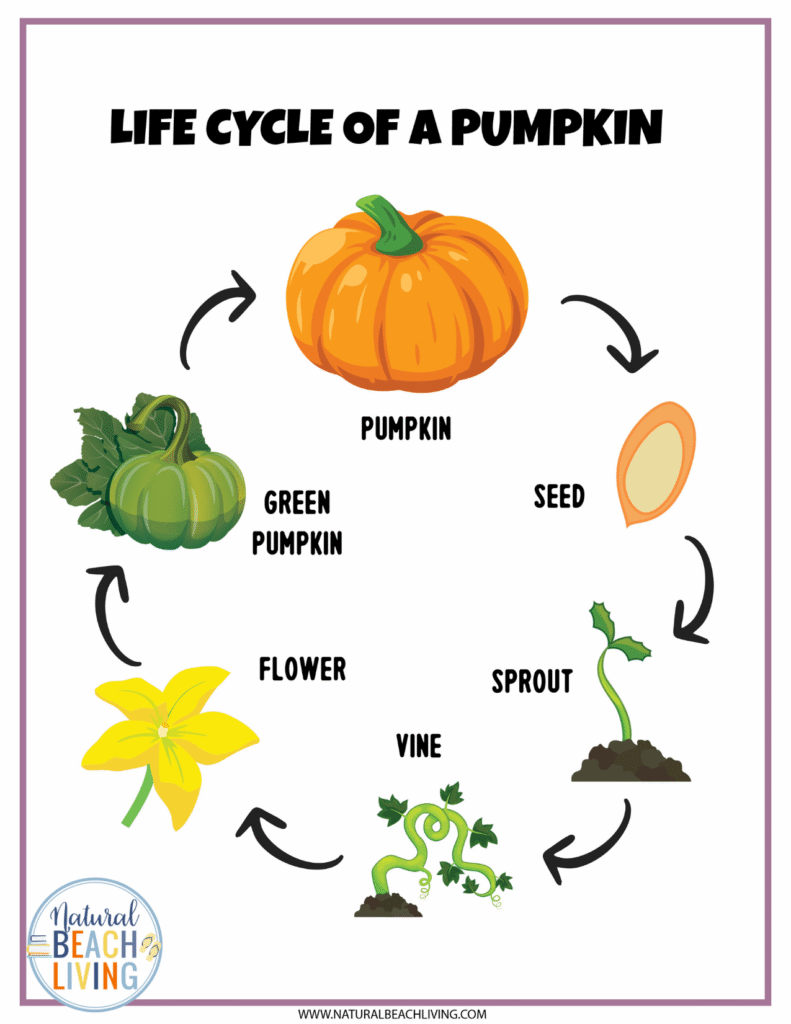
Understanding the pumpkin life cycle gives kids a complete picture of how these plants grow from tiny seeds to large orange fruits. The cycle starts with a small seed planted in warm soil during late spring.
The main stages include:
- Seed stage – The pumpkin seed needs warm soil and water to start growing
- Sprout stage – A small green shoot pushes up through the soil
- Vine stage – Long green vines spread across the ground with large leaves
- Flower stage – Yellow flowers bloom on the vines
- Fruit stage – Small green pumpkins form and grow larger over several months
You can create a simple chart showing each stage. Draw or find pictures of seeds, sprouts, vines, flowers, and pumpkins.
Have your kids plant pumpkin seeds in small cups. They can watch the seeds sprout and grow into seedlings over a few weeks.

Exploring Pumpkins Through Science
Science experiments with real pumpkins teach kids about weight, size, and water content. You need a few pumpkins of different sizes, a scale, measuring tape, and a ruler for these activities.
Start by having kids guess which pumpkin weighs the most. Then weigh each one and compare the results. Measure the height and width of each pumpkin too.
Cut open a pumpkin to explore what’s inside. Kids can see that pumpkins are mostly water – about 90% of a pumpkin is water.
Simple science activities include:
- Weighing pumpkins before and after removing seeds
- Measuring pumpkin parts with rulers
- Counting seeds from different sized pumpkins
- Comparing how many seeds vs. how much pulp each pumpkin contains
These hands-on experiments help kids practice math skills while learning about pumpkins.
Pumpkin Investigation Worksheet
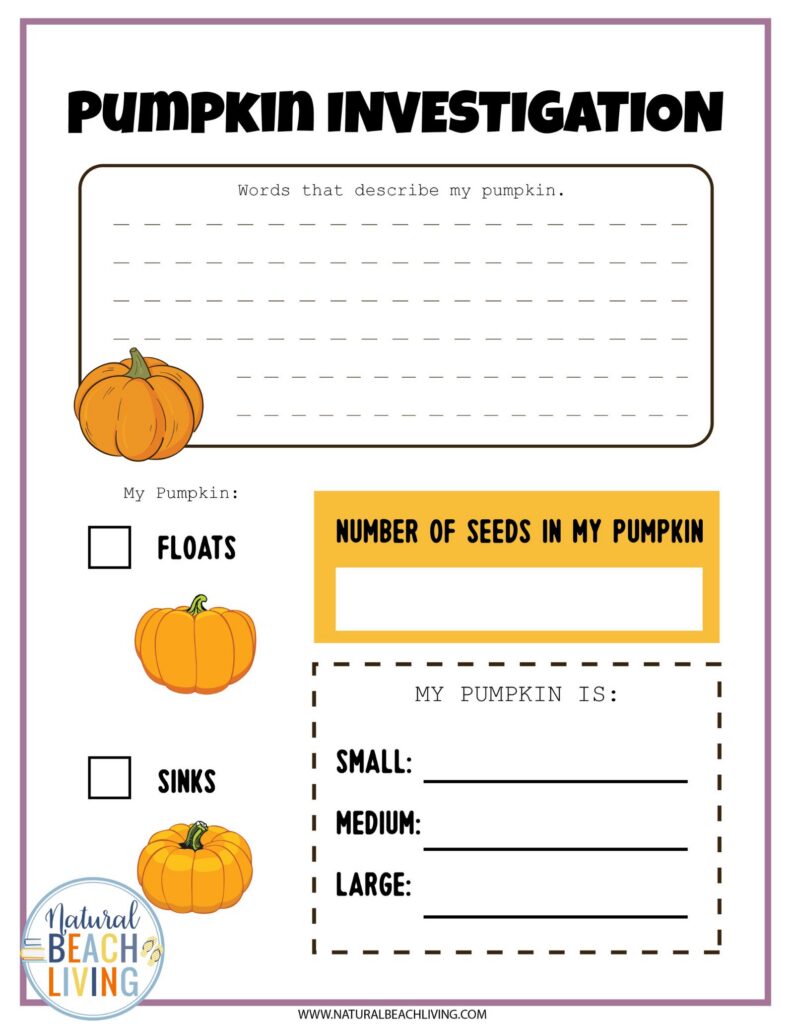
A pumpkin investigation worksheet helps kids record what they discover during their hands-on exploration. This worksheet guides them through measuring, weighing, and observing their pumpkin.
Create a simple form with spaces for kids to write down their pumpkin’s measurements. Include boxes for height, width, weight, and number of seeds.
Your worksheet should include:
- Spaces to draw or describe the pumpkin’s outside appearance
- Areas to record measurements and weight
- A section for counting and recording seeds
- Questions about what they observed inside the pumpkin
Kids can use this worksheet during their pumpkin investigation. It helps them practice writing numbers and describing what they see.
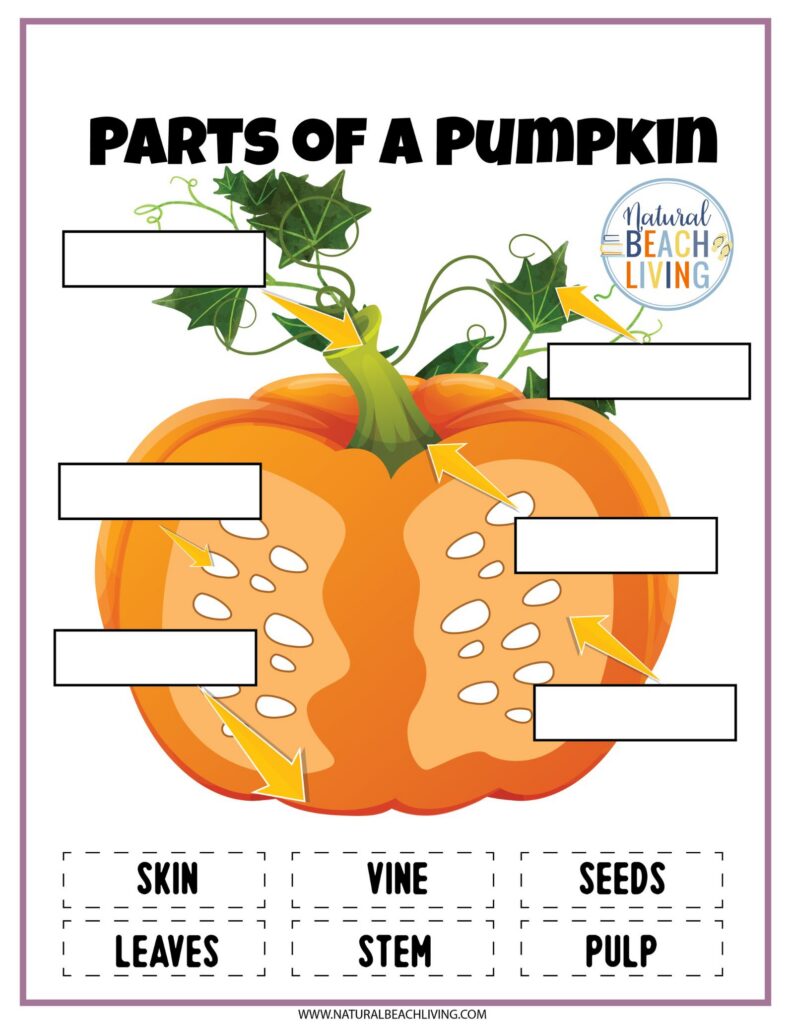
Parts of a Pumpkin
Learning the parts of a pumpkin teaches kids basic plant vocabulary and helps them understand how pumpkins are structured. The main parts include the stem, skin, ribs, seeds, and pulp.
You can make this lesson hands-on by cutting open a real pumpkin. Use small pieces of cardstock and toothpicks to make labels for each part.
The basic pumpkin parts are:
- Stem – The brown part on top that connected the pumpkin to the vine
- Skin – The hard orange outer layer
- Ribs – The curved lines that run from top to bottom
- Seeds – The flat white seeds inside
- Pulp – The stringy orange flesh inside
Have kids stick the labels into the correct spots on the cut pumpkin. This makes learning the parts more memorable than just looking at pictures.
You can also use worksheets where kids draw lines from words to the correct pumpkin parts.
Pumpkin Activities
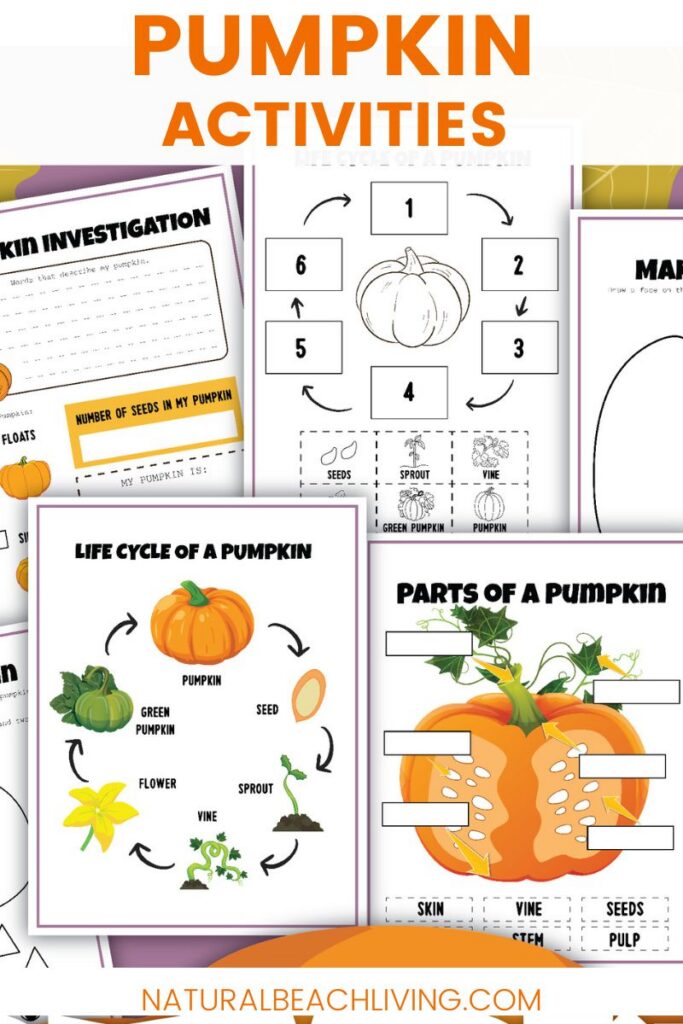
Engaging Pumpkin Activities
These activities help kids learn through fun hands-on experiments, creative art projects, drawing activities, and reading adventures. Each activity builds important skills while celebrating the fall season.
Hands-On Pumpkin Learning
Hands-on pumpkin activities make learning exciting for kids. You can start with simple science experiments that teach measurement and observation skills.
Science Activities:
- Measure pumpkin height and width with rulers
- Weigh different sized pumpkins on a scale
- Count seeds inside carved pumpkins
- Test if pumpkins float or sink in water
Math Learning: Your kids can practice counting by tens using pumpkin seeds. Sort seeds by size to work on patterns. Use pumpkins to teach fractions when you cut them into pieces.
Cooking Projects: Simple pumpkin recipes teach kids to follow directions. They learn about measuring ingredients and see how heat changes food. Try making pumpkin bread or roasted pumpkin seeds together.
These activities work great for kids in kindergarten through second grade. You can make them easier or harder based on your child’s age.
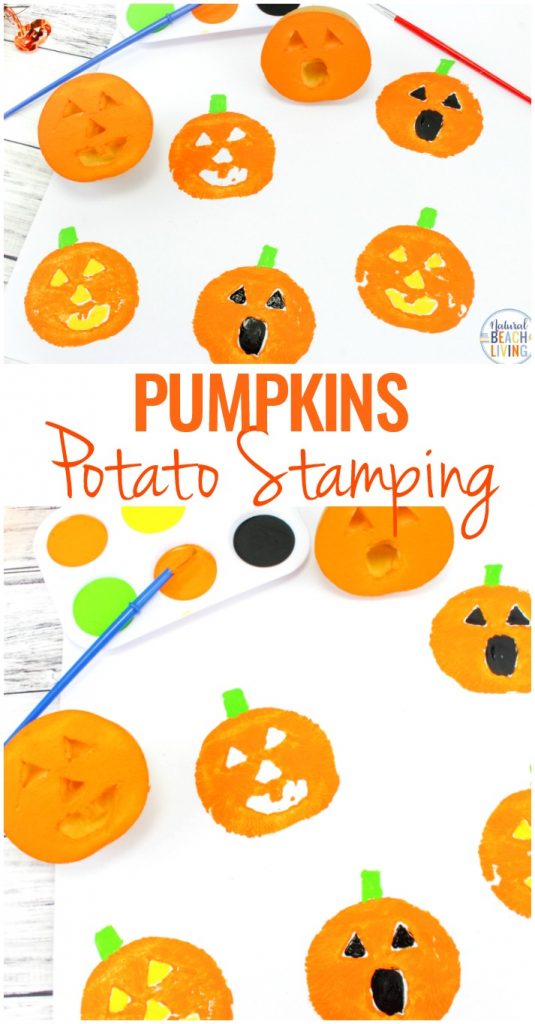
Creative Pumpkin Crafts
Pumpkin art and crafts let kids use their creativity while building fine motor skills. These projects work well for rainy fall days when you want indoor activities.
Easy Craft Ideas:
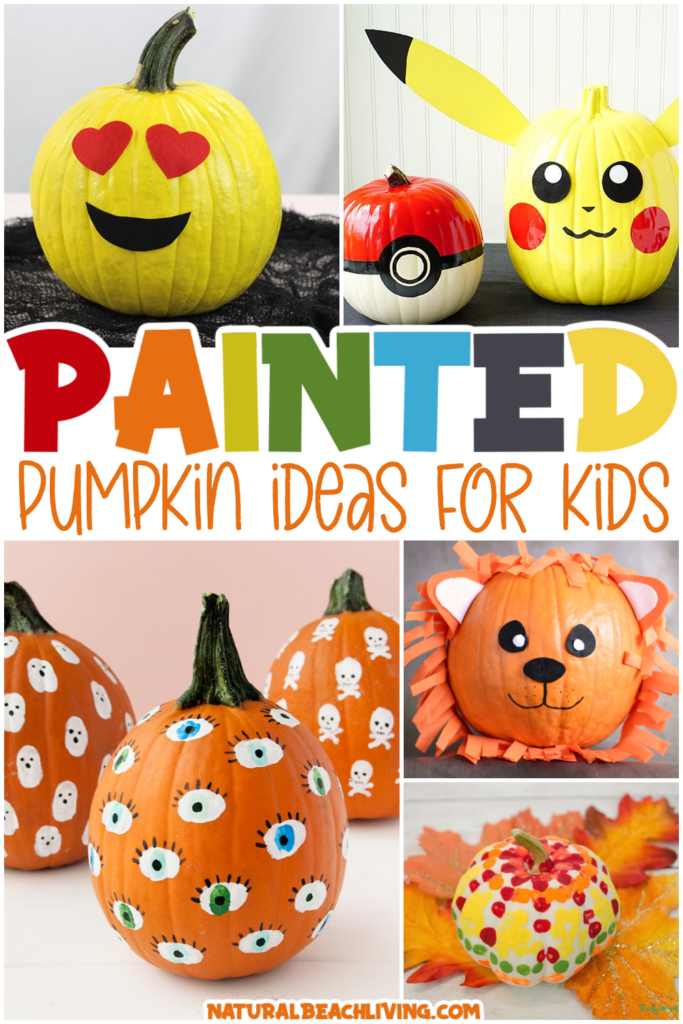
- Paint small pumpkins with brushes or sponges
- Glue construction paper shapes onto pumpkins
- Wrap pumpkins in colorful yarn or ribbon
- Make pumpkin faces with stickers
Paper Pumpkins: You can make pumpkins from orange construction paper. Cut out pumpkin shapes and let kids decorate them. Add green paper stems and leaves.
Nature Crafts: Collect leaves, acorns, and twigs outside. Use these items to decorate real pumpkins. This teaches kids about different fall materials.
Most craft supplies you need are basic: paper, glue, and paint. These projects help kids practice cutting, gluing, and painting skills.
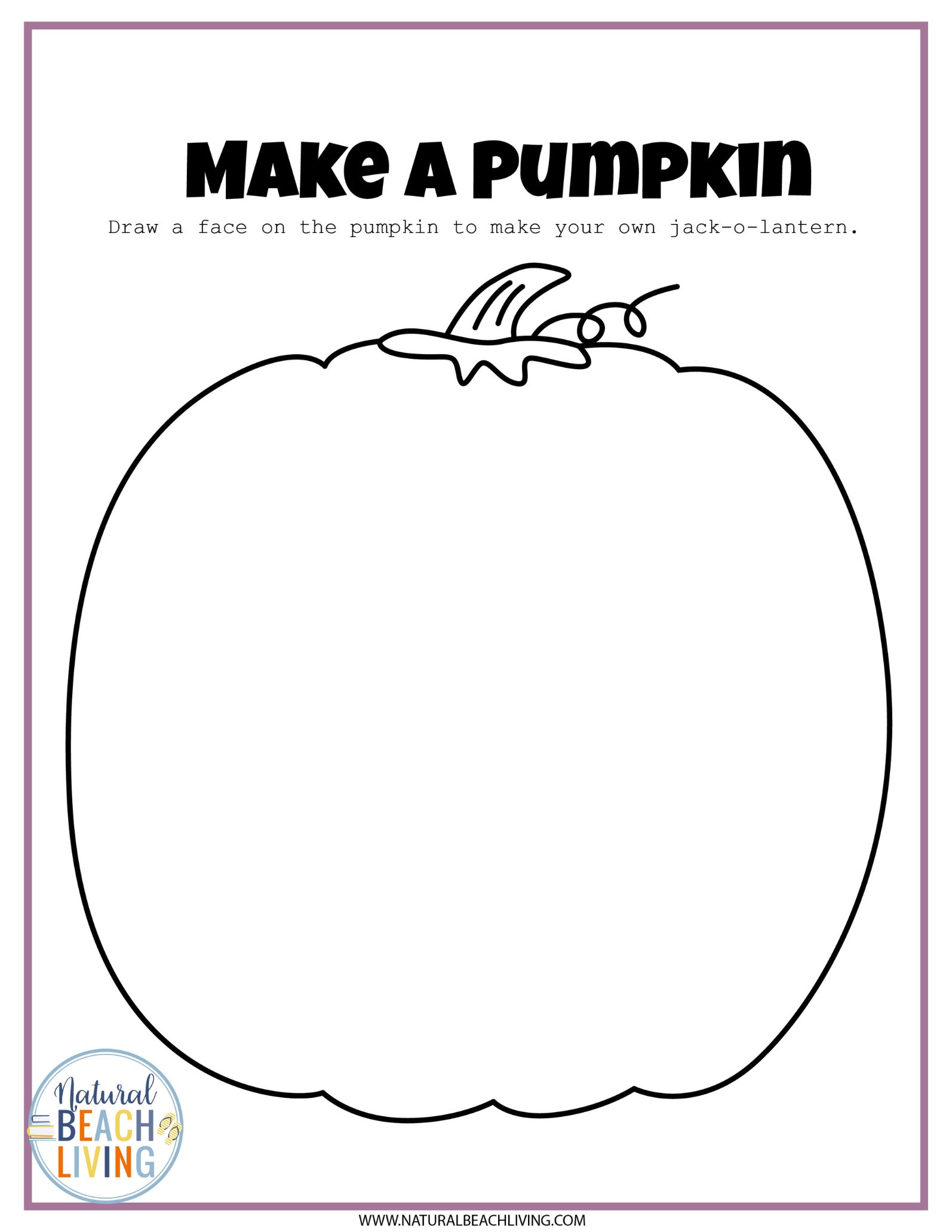
Draw a Jack o Lantern
Drawing jack o’ lanterns helps kids practice art skills and express creativity. Start with simple shapes and add details step by step.
Basic Steps:
- Draw a big circle for the pumpkin body
- Add curved lines from top to bottom
- Draw a triangle nose in the center
- Make triangle or circle eyes
- Add a mouth shape
- Draw a stem on top
Fun Variations: You can teach kids to draw different facial expressions. Try happy, scary, surprised, or silly faces. Each face shows different emotions through the eyes and mouth shape.
Art Techniques: Use crayons for younger kids and colored pencils for older ones. Show them how to add shadows with darker orange colors. Light orange or yellow can make highlights.
This activity works well for kids of all ages. Younger children can draw simple faces while older kids add more details.




Pumpkin-Themed Books
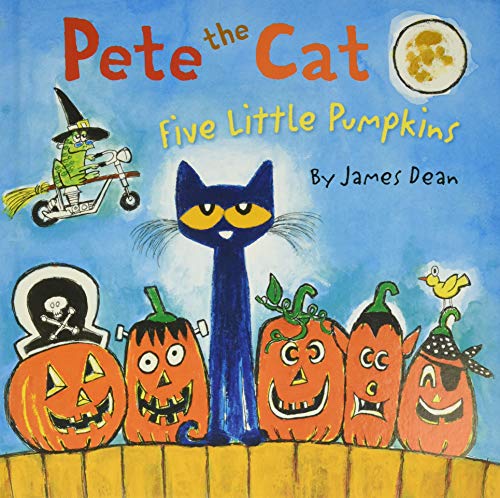
Reading pumpkin stories adds language learning to your unit study. These books teach new words and help kids understand pumpkin facts.
Popular Book Choices:
- “The Biggest Pumpkin Ever” by Steven Kroll
- “Pumpkin Jack” by Will Hubbell
- “From Seed to Pumpkin” by Wendy Pfeffer
- “The Pumpkin Book” by Gail Gibbons
Reading Activities: After reading each book, ask your child questions about the story. Have them retell the main events in order. This builds comprehension skills.
Learning Extensions: Use the books to start discussions about pumpkin life cycles. Compare fiction and non-fiction pumpkin books. Kids learn the difference between real facts and made-up stories.
Create a simple book list and check off each one you read together. This shows progress and keeps kids motivated to read more pumpkin-themed stories throughout your unit study.
CLICK HERE TO PURCHASE THIS AWESOME PUMPKIN UNIT STUDY FOR KIDS

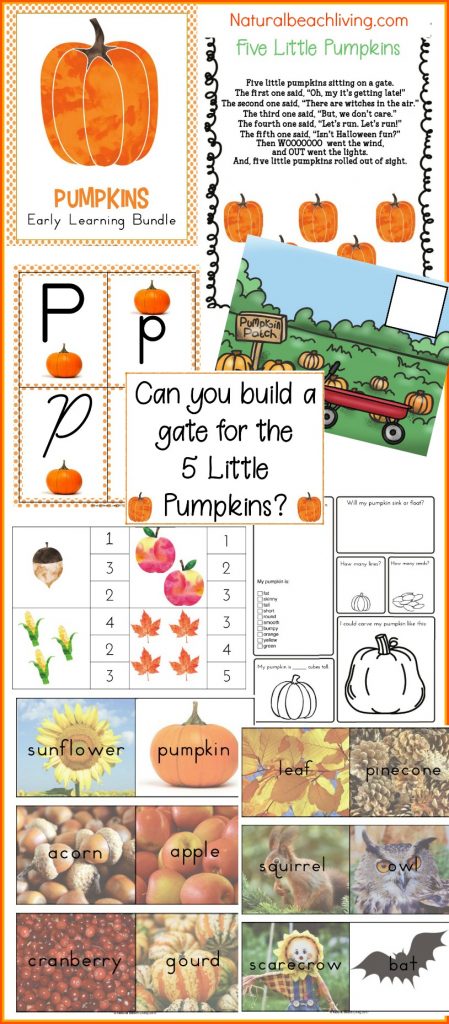
Pumpkin Theme Learning for Preschool and Kindergarten
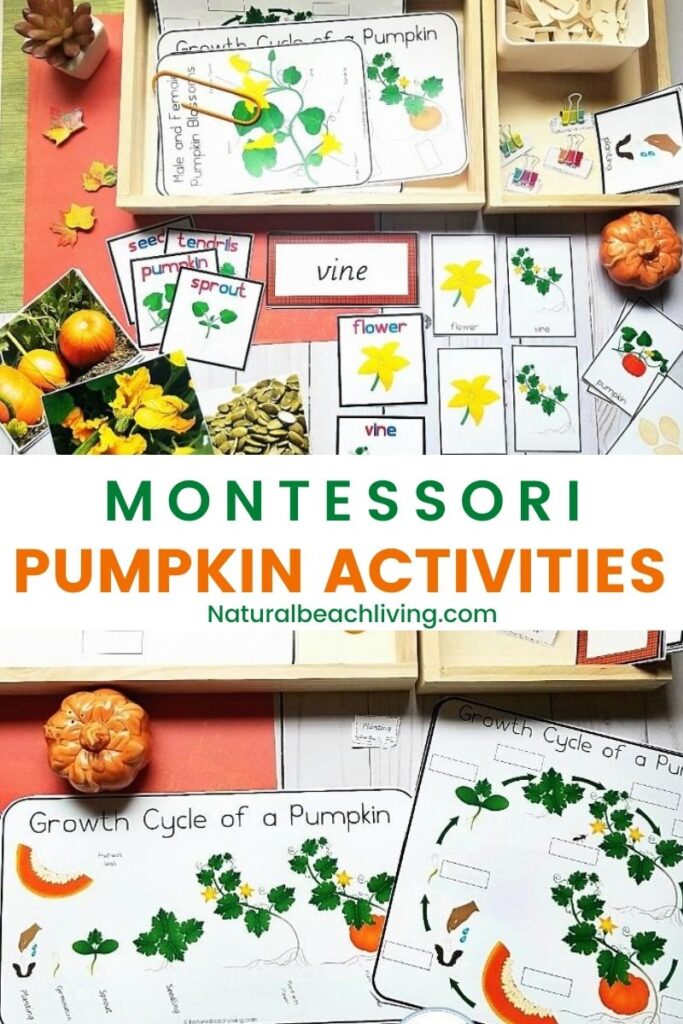
Montessori Pumpkin Lessons and Activities
30 Painted Pumpkin Ideas